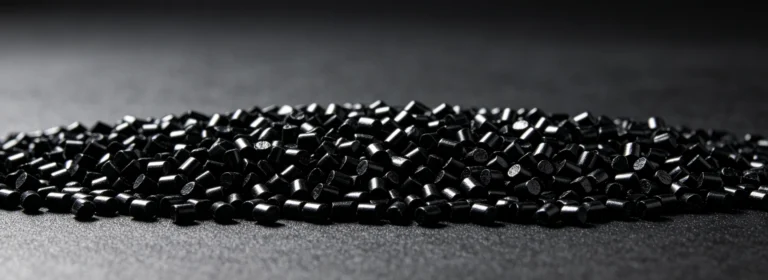
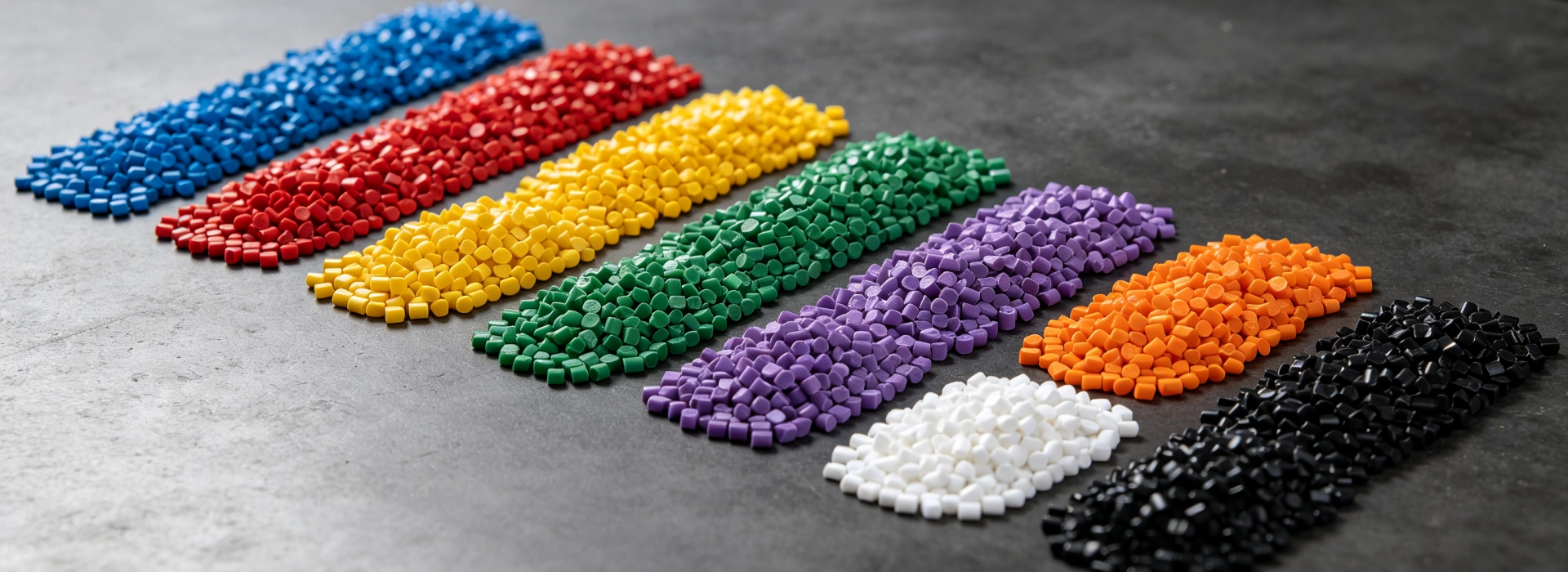
Color is a brand decision. A red bag, a blue crate or a green pipe is ordered against a standard, and every roll or batch must match it — not just today, but across orders and seasons. Color masterbatch is how processors turn that requirement into a repeatable process.
We have manufactured color masterbatch since 2002. This guide covers the three main process families — blown film, injection molding and pipe/sheet extrusion — with the pigment loading, carrier and performance points from our range.
Our color masterbatch range
| Grade | Pigment content | Carrier | MFI (g/10min) | Dosage | Typical applications |
|---|---|---|---|---|---|
| Blown-film color masterbatch | 10%–30% | LLDPE | 30 | 2%–5% | Colored shopping bags, courier bags, trash bags, industrial packaging film, shrink film, ag film, composite packaging film |
| Molding color masterbatch | 20%–40% | PE / PP | 22 | 2%–5% | Housings, fittings, toys, crates, basins/buckets, appliance shells, auto parts, daily goods |
| Pipe & sheet extrusion color masterbatch | 20%–40% | PE / PP | 15 | 2%–5% | PE water/drainage pipes, PE anti-corrosion boards, geotech boards, PP thick boards, PP hollow boards |
| Wire-drawing (raffia) color masterbatch | 20%–40% | PP | 14 | 2%–5% | Raffia, woven bags, safety nets, filter cloth, safety belts |
| Blow-molding color masterbatch | 20%–40% | PE / PP | 12 | 2%–5% | Containers, drums, bottles, tanks, large hollow parts |
All grades are compatible with PE (HDPE, LDPE, LLDPE) and PP, and most are available in UV-weathering versions for outdoor service.
Blown film: dispersion is everything
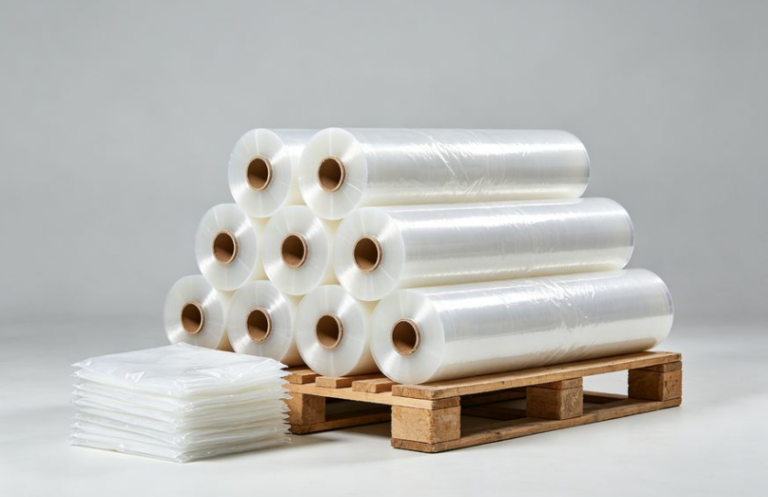
Colored film — shopping bags, courier bags, trash bags, industrial packaging, shrink film, ag film and composite packaging — runs thin. Any pigment agglomerate becomes a visible speck, a fish eye or a pinhole. The blown-film color masterbatch (10%–30% pigment, LLDPE carrier, MFI 30, dosage 2%–5%) is designed so that:
- Excellent dispersion with low filter pressure — agglomerates are broken down in production, not in your die.
- No fish eyes, color spots or crystals on the film surface.
- No migration or bleeding into or out of the film.
- Heat stability through the blown-film process.
- No strength loss — tensile, tear and dart impact are preserved.
- Batch consistency, no streaks or clouds across rolls.
- UV grade available for agricultural film and outdoor packaging.
Injection molding: color that must hold its shape
Molded products — housings, fittings, toys, crates, basins, appliance shells, auto parts and daily goods — have complex geometry, weld lines and thick sections. The molding color masterbatch (20%–40% pigment, PE/PP carrier, MFI 22, dosage 2%–5%) addresses the failure modes molders fear:
- No spots, streaks, water marks or weld-line color difference on molded surfaces.
- Heat stability at molding temperatures and residence times.
- No blooming or plate-out — the color does not migrate to the surface or the mold.
- No mechanical loss — impact and tensile properties stay at specification.
- Batch-stable shades for repeat orders, plus a UV version and toy-compliant formulations for the toy market.
Pipes, sheets and profiles: color in continuous extrusion
PE water and drainage pipes, anti-corrosion boards, geotech boards, PP thick boards and hollow boards are extruded continuously and judged on uniformity. The pipe & sheet extrusion color masterbatch (20%–40% pigment, PE/PP carrier, MFI 15, dosage 2%–5%) is built for that process:
- No longitudinal color streaks — the failure mode of continuous extrusion.
- No crystals or fish eyes in thick sections.
- Heat stability through long runs.
- No pressure or creep loss in pipe products.
- Batch-stable shades, with a UV grade for outdoor geotech boards.
Wire drawing and blow molding
For PP raffia and woven products (safety nets, filter cloth, safety belts), our wire-drawing color masterbatch (PP carrier, MFI 14) preserves flat-yarn strength and prevents die clogging. For containers, drums, bottles and tanks, the blow-molding color masterbatch (PE/PP carrier, MFI 12) delivers uniform color in thick walls without flow marks.
Dosage and processing rules
- Dosage: 2%–5% across all grades; adjust for shade depth and product thickness.
- Mixing: 3–5 minutes, uniform blend.
- Storage: sealed, moisture-proof.
- Inspection: film — specks, fish eyes, shade, strength; molding — streaks, weld lines, plate-out; extrusion — longitudinal streaks, surface, pressure properties.
Choosing a color grade
| Process | Grade | Key checks |
|---|---|---|
| Blown film | 10–30% pigment, LLDPE carrier | Dispersion, filter pressure, no fish eyes, UV grade for ag film |
| Injection molding | 20–40% pigment, PE/PP carrier | Weld-line color, plate-out, heat stability, toy compliance |
| Pipe/sheet extrusion | 20–40% pigment, PE/PP carrier | Longitudinal streaks, pressure/creep, UV for outdoor boards |
| Raffia/woven | 20–40% pigment, PP carrier | Flat-yarn strength, die clogging |
| Blow molding | 20–40% pigment, PE/PP carrier | Flow marks, wall uniformity |
Frequently asked questions
Why do my colored films show specks?
Specks are undispersed pigment agglomerates. Use a film-grade masterbatch with documented dispersion and check mixing time and hopper cleanliness.
What causes weld-line color difference in molded parts?
It comes from pigment flow behavior at the weld line. A molding-grade masterbatch with fine dispersion and matched carrier minimizes it.
Is a UV color masterbatch worth it for outdoor products?
For ag film, geotech boards and outdoor packaging, yes — the UV version prevents fading and mechanical degradation that standard shades cannot survive.
Can one color masterbatch serve all my processes?
Broad compatibility exists (PE/PP), but film, molding, extrusion, raffia and blow molding have different failure modes. Matching the grade to the process is safer and usually cheaper in waste terms.