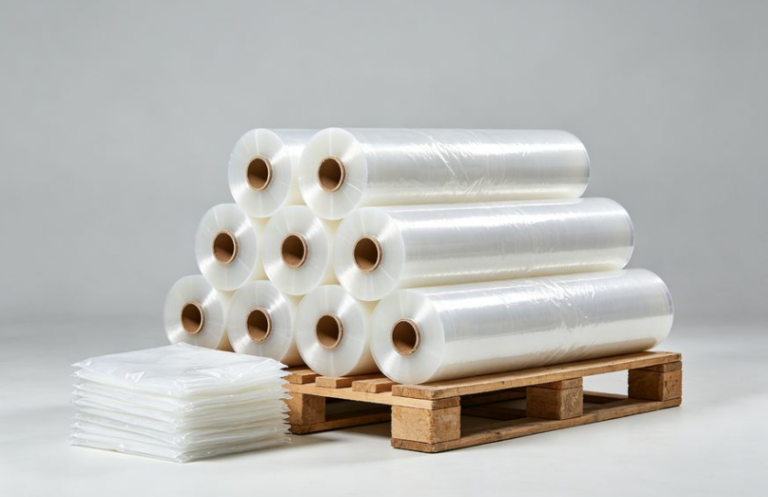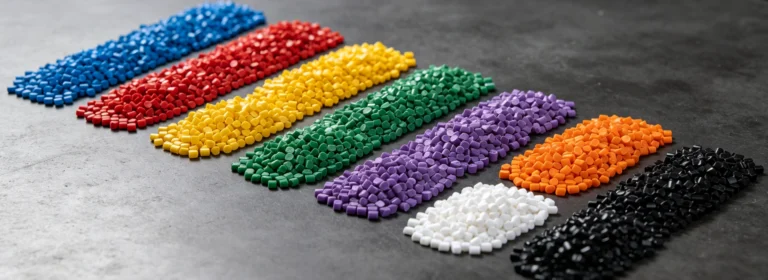
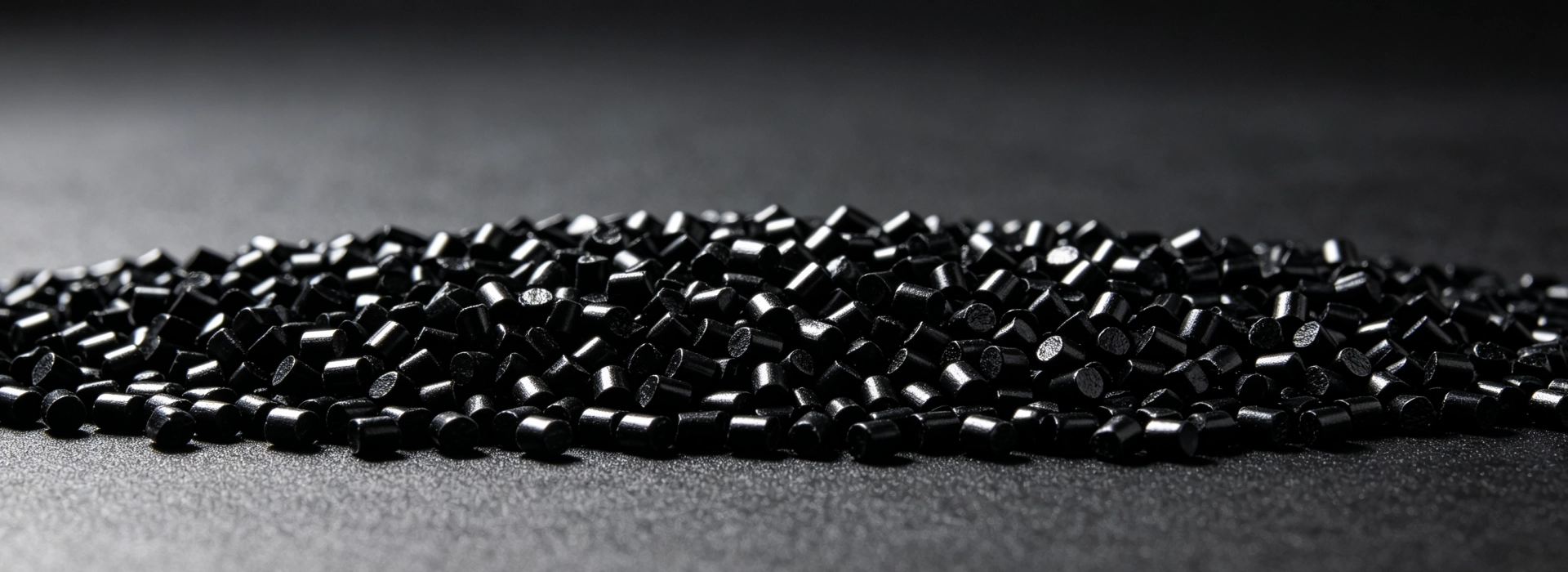
Black film products are a volume business: trash bags, T-shirt bags and shopping bags are made by the ton, sold by the piece, and judged on three things — blackness, strength and cost. The masterbatch inside them decides all three.
We have produced black masterbatch for film processors since 2002. This guide covers the four film-grade black masterbatches in our range — from economical 20% carbon black grades for trash bags to 50% high-loading grades for thin co-extruded film — with the actual specifications and the processing logic behind them.
Why black masterbatch is the workhorse of film coloring
Black film products are almost always made with a masterbatch, not raw carbon black powder. The reasons are practical:
- Dispersion. Carbon black is light, fluffy and easily airborne. Pre-dispersed in a carrier resin, it cannot contaminate the workshop, the machine or the operator.
- Cleanliness. Powder handling disappears entirely — masterbatch is dust-free.
- Consistency. Every pellet carries the same pigment concentration, so the shade and hiding power stay constant across runs.
- Cost control. Film is price-sensitive; masterbatch lets processors dose precisely and switch grades by application.
Our film-grade black masterbatch range
| Grade | Carbon black | Carrier | MFI (g/10min) | Dosage | Best for |
|---|---|---|---|---|---|
| Trash bag black masterbatch | 20% | LDPE | 20 | 2%–5% | Trash bags, T-shirt bags, composite film, 3/5-layer co-extrusion, courier bags |
| Shopping bag black masterbatch | 40% | HDPE / LDPE | 20 | 1%–3% | Shopping bags, ag film, trash bags, packaging film, 3/5-layer film |
| LLDPE film black masterbatch | 40% | LLDPE | 20 | 2%–5% | Blown film, cast film, extrusion film, ABA film |
| 50% high-loading black masterbatch | 50% | LDPE (high-MFI virgin) | 10 | 1%–3% | Thin film, landfill/pond liners, deep black at low dosage |
All grades are compatible with PE (HDPE, LDPE, LLDPE) and PP; the 50% grade extends compatibility to EVA, ABS, PET, PC and PS, making it useful beyond film as well.
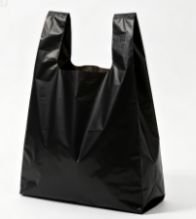
Trash bags: the cost-and-performance balance
Trash bags live and die on price, which is why many are made with recycled PE. Two things matter when coloring them:
- Recycled resin needs hiding power. Regrind carries gray or yellow base tones. Black masterbatch at 2%–5% covers the base completely, which is why the industry standard carbon black content in black trash bags ranges from about 5% to 35% depending on recycled content and film thickness.
- Dispersion must survive thin gauges. An undispersed agglomerate becomes a visible speck or a pinhole in thin film. Our trash-bag grade uses custom dispersants and full internal mixing so the film surface stays smooth and glossy.
For the most cost-driven lines, the 20% carbon black grade keeps the masterbatch price low while delivering deep, uniform black at 2%–5% dosage. When the order demands deeper blackness at lower dosage — for example premium black T-shirt bags — the 40% grades cover more with less.
Shopping bags and thin film: higher loading wins
Black shopping bags and packaging film are printed, handled and compared side by side on the shelf. Buyers notice the difference between “black” and “jet black”.
Two specifications drive the result:
- Carbon black loading (40% in our shopping-bag and LLDPE-film grades). Higher loading means deeper opacity at lower dosage — and lower cost per bag.
- Carrier matching. The shopping-bag grade uses an HDPE/LDPE carrier blend, the LLDPE-film grade uses an LLDPE carrier. A matched carrier prevents haze, die drool and mechanical weakening.
The 50% high-loading grade goes further: at 1%–3% dosage it achieves the blackness that lower-loading grades need 4%–5% to reach, which is why it is also the grade of choice for very thin films and for co-extruded structures where each layer must be as thin as possible.
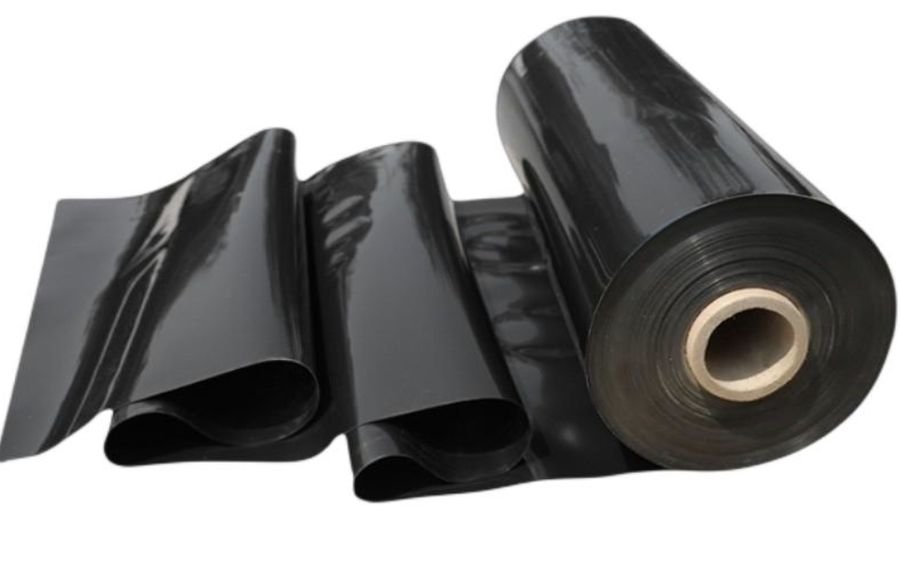
Why LLDPE film deserves its own grade
LLDPE (linear low-density polyethylene) is produced by copolymerization and has a narrower molecular weight distribution and a linear structure compared with conventional LDPE. That gives LLDPE film better tensile, permeation, impact and tear resistance — and it changes how the film flows in the die. A masterbatch with matched MFI and carrier (our LLDPE-film grade runs at MFI 20 with an LLDPE carrier) keeps the melt uniform, preventing streaks and maintaining the film’s mechanical performance. This is exactly the “flow behavior” that shows up as good film or rejected rolls.
Processing rules for black film
- Dosage: start at 2%–5% (economical grade) or 1%–3% (40–50% loading grades); adjust for shade and film thickness.
- Mixing: blend resin and masterbatch for 3–5 minutes until evenly distributed.
- Storage: keep sealed and moisture-proof — wet masterbatch causes bubbles and splay marks.
- Inspection: check film for color difference, specks, fish eyes and surface gloss; adjust dosage or grade for any defect.
Quality signals to check before you buy
- Blow a trial film at your planned gauge and dosage; inspect against a light table for specks and fish eyes.
- Compare blackness against a reference under standard lighting.
- Check batch consistency — order a second batch and compare shade and process behavior.
- Ask for compliance documentation (SGS, RoHS, FDA-related testing) where the film touches food or feed.
Frequently asked questions
How much black masterbatch do I add to trash bags?
Typically 2%–5% of a 20% carbon black grade for cost-driven bags, or 1%–3% of a 40–50% grade when deeper blackness at lower dosage matters. Adjust to your recycled content and film thickness.
Can black masterbatch be used with recycled PE?
Yes — black masterbatch is the standard way to color recycled-content film because it hides the recycled base completely. Pair it with a desiccant masterbatch (1%–3%) if your recycled resin carries moisture. See our desiccant masterbatch guide.
Why does my black film show white specks?
White specks are undispersed carbon black agglomerates or contamination. Use a film-grade masterbatch with proven dispersion and verify mixing time and hopper cleanliness.
What is the difference between 20% and 50% carbon black masterbatch?
The percentage is the pigment concentration in the pellet. Higher loading reaches the same blackness at lower dosage — better for thin film and deep shades — while lower loading is more economical for thick, low-cost products.
About Caytten
Caytten (Shijiazhuang Caiteng Technology Co., Ltd.) has manufactured black masterbatch since 2002, with 12 automated twin-screw production lines and an annual capacity exceeding 50,000 tons. Our film-grade black masterbatch range spans 20%–50% carbon black loading for trash bags, T-shirt bags, shopping bags, courier bags and co-extruded film, with raw materials passing SGS, RoHS and FDA testing.
Building a black film product? Tell us your film type, gauge, recycled content and dosage target — we will recommend the right carbon black loading and send samples. Browse our product range or contact our team. WhatsApp/Tel: +86 13903216617.